
The rom-com that made me question whether women actually want Mr Darcy
There is something both comforting and dangerous about reading Me and Mr Darcy as a lifelong fan of Pride and Prejudice. Comforting because Alexandra Potter clearly adores Austen’s world and knows exactly what Austen readers want. Dangerous because somewhere between the time travel, romance, comedy and endless references to Mr Darcy, Potter quietly exposes something many women probably do not want to admit out loud.
Maybe we do not actually want Mr Darcy himself.
Maybe we simply want the idea of him.
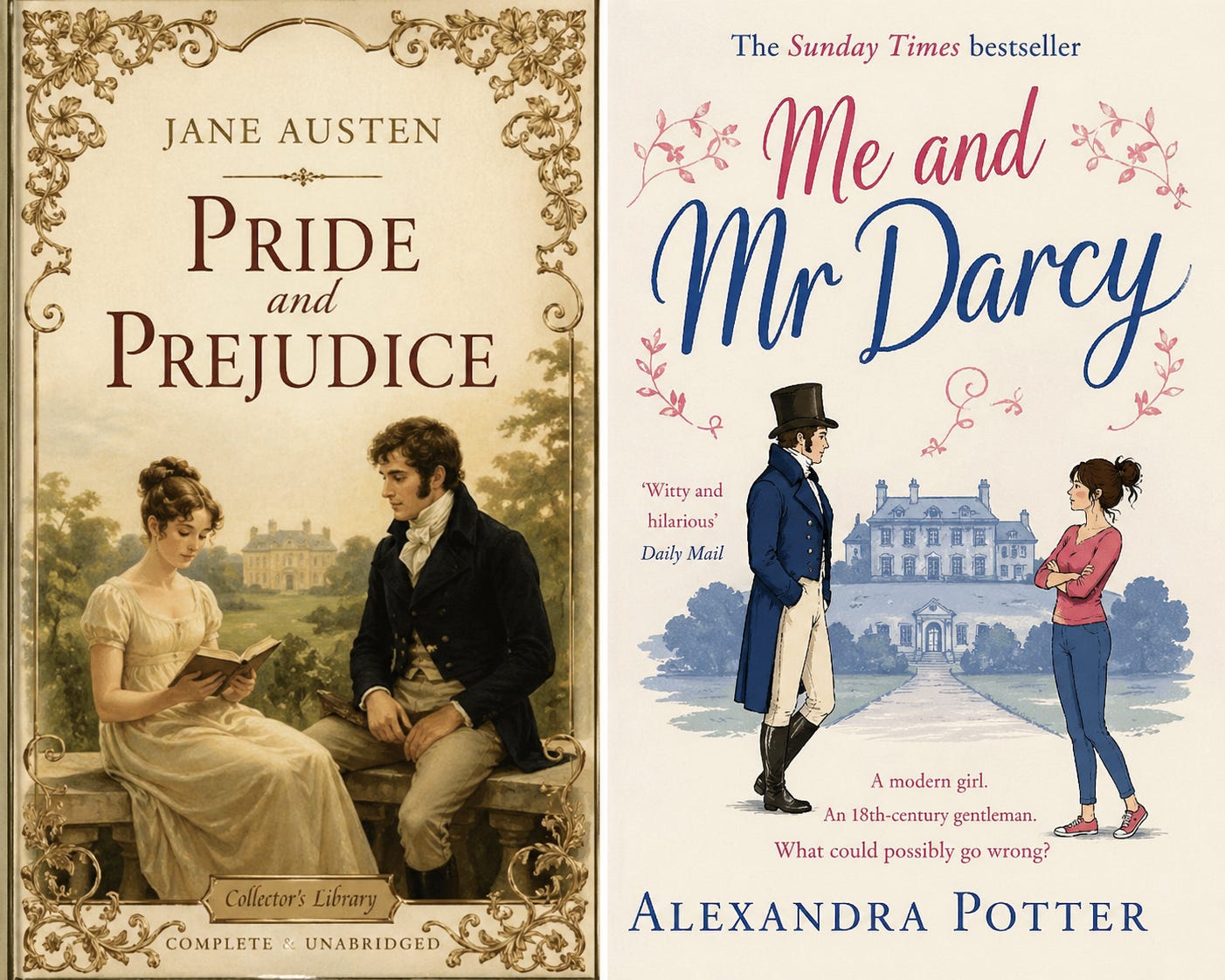
What makes Me and Mr Darcy so enjoyable is that it does not try to hide its connection to Austen’s masterpiece. Potter practically lays the similarities out for readers to enjoy like literary breadcrumbs. The parallels between the two novels are impossible to miss, and honestly, recognising them becomes part of the fun.
Spike initially dismisses Emily in much the same way Darcy dismisses Elizabeth Bennet at the Meryton assembly. In Austen’s novel, Darcy famously describes Lizzie as “tolerable, but not handsome enough to tempt me,” while Spike similarly sees Emily as dull, unimpressive and entirely not his type. Naturally, both men later fall deeply in love with the very women they initially underestimate, proving once again that fictional men enjoy creating unnecessary emotional complications for themselves.
But what makes Spike interesting is that unlike Darcy, he belongs to Emily’s world. He is sarcastic, frustrating, arrogant and emotionally irritating in exactly the way modern rom-com men tend to be. He joins the Austen tour as a journalist writing an article about why women remain obsessed with Mr Darcy, and from the beginning, Emily cannot stand him. Which of course, in romantic comedy language, usually means marriage is approximately three chapters away.
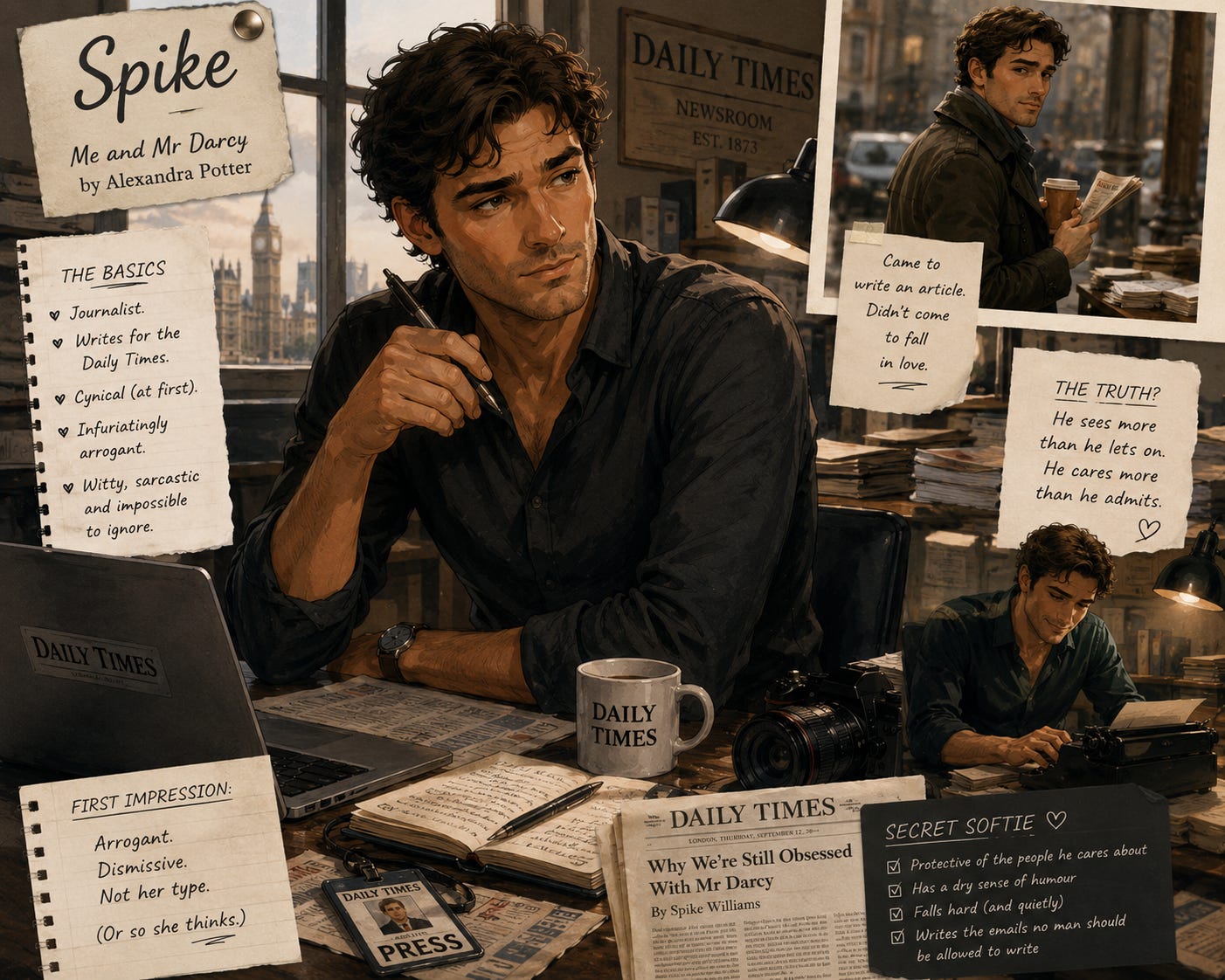
Their relationship develops in exactly the same way Lizzie and Darcy’s does. It begins with irritation and judgement, slowly shifts into curiosity and emotional understanding, and eventually becomes something much deeper. Emily constantly compares Spike against her fantasy of Mr Darcy and, at first, Spike loses badly. He is too blunt, too modern, too cynical and nowhere near romantic enough to compete with centuries of female obsession surrounding Darcy.
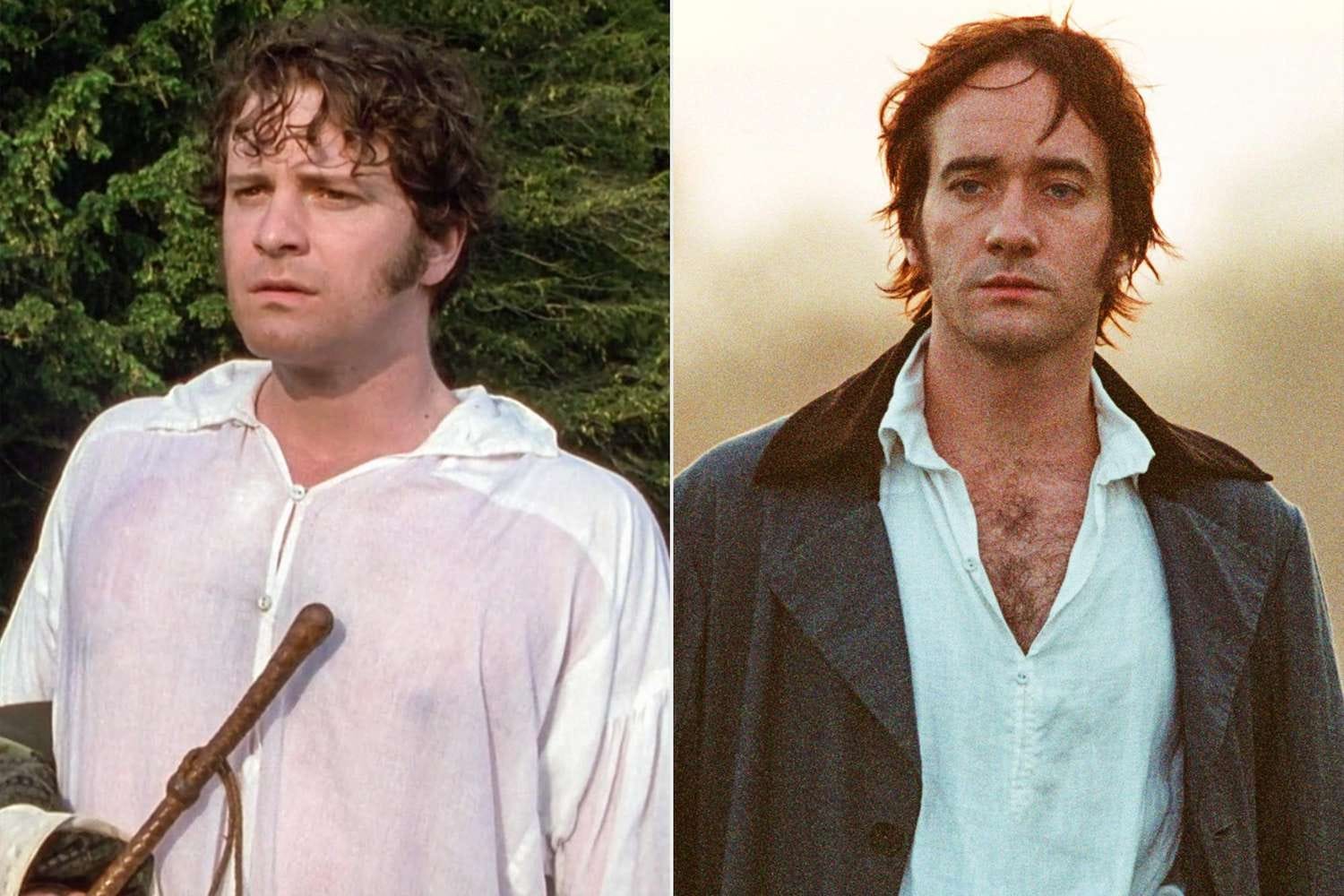
And honestly, poor man. No real human being stands a chance against an imaginary Regency gentleman played by Colin Firth emerging from a lake in slow motion.
The similarities continue throughout the story. Spike’s confession of feelings to Emily strongly resembles Darcy’s disastrous first proposal to Elizabeth. The misunderstandings involving Spike, Ernie and Spike’s mother echo the complicated storyline between Darcy, Wickham and Darcy’s younger sister. Emily and Stella’s friendship even resembles Elizabeth and Charlotte Lucas’ relationship, particularly in the contrast between romantic idealism and practicality.
And then there is the letter… Of course there is a letter.
No Austen-inspired novel could survive without one emotionally devastating explanatory letter from a misunderstood man.
In Me and Mr Darcy, Spike sends Emily a lengthy email explaining everything after she has badly misjudged him. Emily even prints it out to read properly, which somehow makes the entire situation feel even more dramatic. The parallel to Darcy’s famous letter in Pride and Prejudice is impossible to ignore. Just as Elizabeth slowly realises she may have misunderstood Darcy completely, Emily begins recognising that her own assumptions about Spike may have been unfair.
Potter even openly acknowledges the similarities herself. Emily begins listing the parallels between her relationship with Spike and Elizabeth’s relationship with Darcy, mentioning the awkward first meeting, the misunderstandings, the explanatory letter and the failed declaration of love. At that point, the novel almost playfully winks at Austen readers.
And honestly, it works brilliantly.
Because beneath the humour and romance lies a surprisingly interesting question. Is Me and Mr Darcy simply a modernised version of Pride and Prejudice? Perhaps the phrase “nothing new under the sun” really is true. Both novels are fundamentally stories about pride, attraction, assumptions and emotional growth. The details change according to time period and culture, but the emotional structure remains almost identical. Replace handwritten letters with emails, carriage rides with trains, and ballroom gossip with modern relationship drama, and human behaviour remains remarkably similar.

But what makes Potter’s novel genuinely clever is not simply the Austen parallels. It is the way she places a modern woman directly into Austen’s world and forces both the heroine and the reader to confront the reality behind the fantasy.
Like many women, I have always loved Mr Darcy. For years, he existed in my mind as the gold standard of fictional men. Loyal, intelligent, emotionally reserved and deeply devoted once he falls in love. In a world full of emotionally confusing men sending one-word replies and disappearing for three days because they “need space,” Darcy feels almost revolutionary.
Potter understands that perfectly. Emily is initially enchanted by Darcy’s manners, composure and gentlemanly behaviour, just as readers expect her to be. But then reality quietly creeps in.
At one point, Darcy expresses genuine surprise that Emily works and questions whether women should even work outside the home at all. According to him, a woman’s place is naturally within the domestic sphere as a wife and mother. Emily reacts with complete shock because, of course, any modern woman would.
And yet, moments later, she still finds herself emotionally melting every time he looks at her.
That contradiction is exactly what makes the novel so funny and insightful. Potter exposes the uncomfortable gap between loving Mr Darcy himself and loving the fantasy Austen created around him.
Because perhaps women do not actually want men exactly like Darcy. We want men with the best parts of him. The loyalty. The emotional sincerity hidden beneath the reserve. The feeling that if such a man loved you, he would remain loyal for life instead of casually ghosting you after three weeks and returning with “sorry, been busy.”
What we do not necessarily want are the rigid social expectations, emotional repression and belief that women belong quietly in drawing rooms forever.
And this is exactly why Emily ultimately belongs with Spike instead.

Because despite all her fantasies about Darcy, it is Spike who actually fits into her real life. Spike understands her world, her humour, her independence and her modern way of thinking. Their relationship begins with friction because Emily spends most of the novel comparing him against an impossible fantasy, but by the end she slowly realises something important. She does not need a perfect Regency gentleman. She needs someone real. Someone flawed, sarcastic, modern and emotionally compatible with the life she actually lives.
Ironically, Spike ends up becoming exactly what Darcy never fully could. A realistic version of the fantasy.
One of my favourite parts of the novel comes later when Emily visits Lyme Park, the filming location used as Pemberley in the 1995 adaptation of Pride and Prejudice. Potter’s description strongly resembles Austen’s original description of Pemberley, and naturally she recreates the famous lake scene with Emily and Darcy.
For Austen fans, that entire section feels almost unfairly enjoyable.
I visited Lyme Park myself and standing beside that lake genuinely felt surreal because, for many readers, Mr Darcy is not simply a fictional character. He is an emotional memory tied to adolescence, romance and the fantasy of being deeply understood by someone emotionally restrained yet utterly devoted. And yes, seeing the famous lake in real life immediately brought back the image of Colin Firth emerging from the water and permanently altering female expectations for romance.

What I also loved about Potter’s novel was how it almost fills a missing emotional gap in Austen’s original story. One thing I have always wondered while reading Pride and Prejudice was exactly when Darcy fell in love with Elizabeth. Austen beautifully shows Lizzie’s emotional journey, but Darcy’s transformation largely happens in the background. Potter almost creates an imagined explanation for that shift by allowing Emily to point out to Darcy that he is actually in love with Elizabeth rather than with her.
Whether Austen intended anything remotely similar becomes irrelevant. It simply works beautifully within Potter’s story and allows readers to imagine Darcy’s emotional awakening in a new way.

By the end of the novel, I realised something slightly devastating. I still love Mr Darcy, but perhaps not entirely as he actually is. What I truly love is the idea of a man with his loyalty, manners, emotional depth and devotion, combined with modern values and emotional openness.
And honestly, maybe that is exactly why every generation still falls for him anyway.